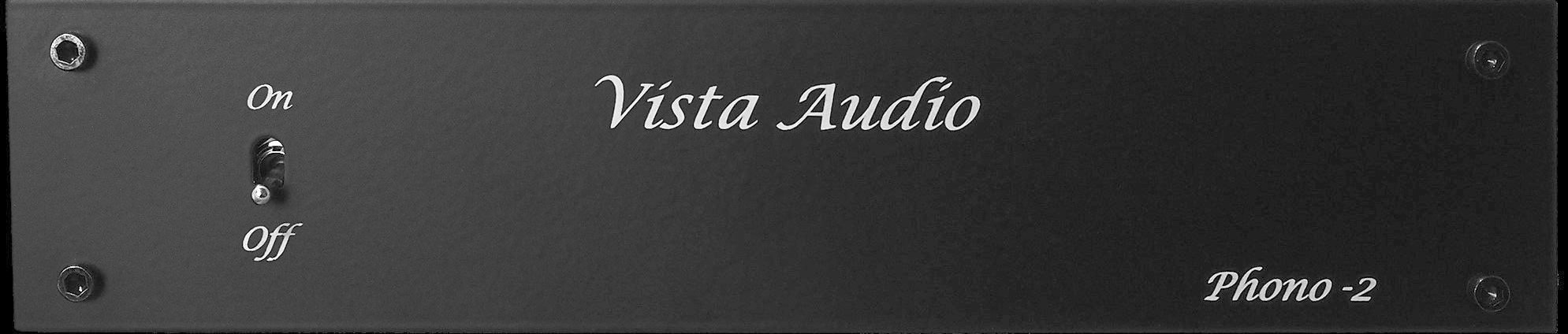
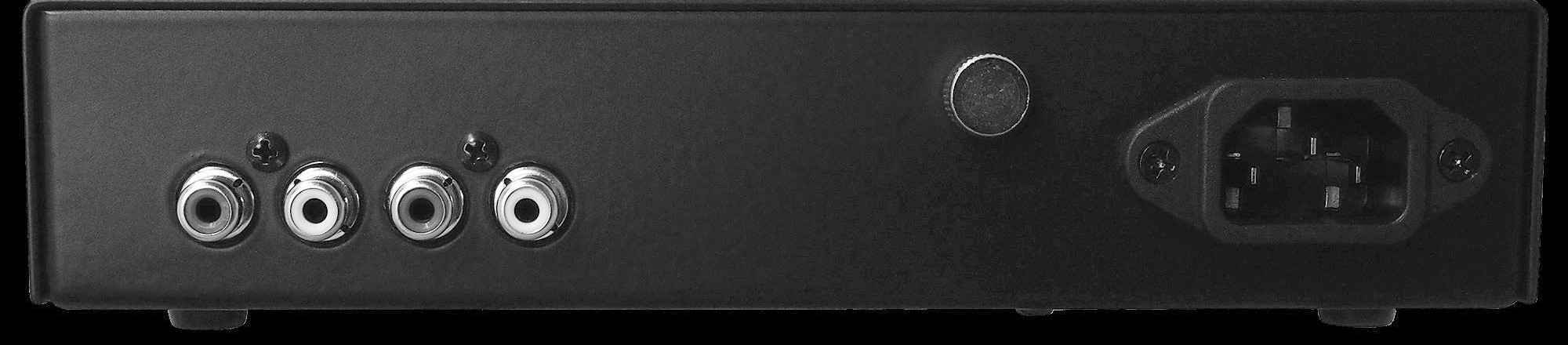
Phono‑2 MkII
High Class Phono Preamplifier
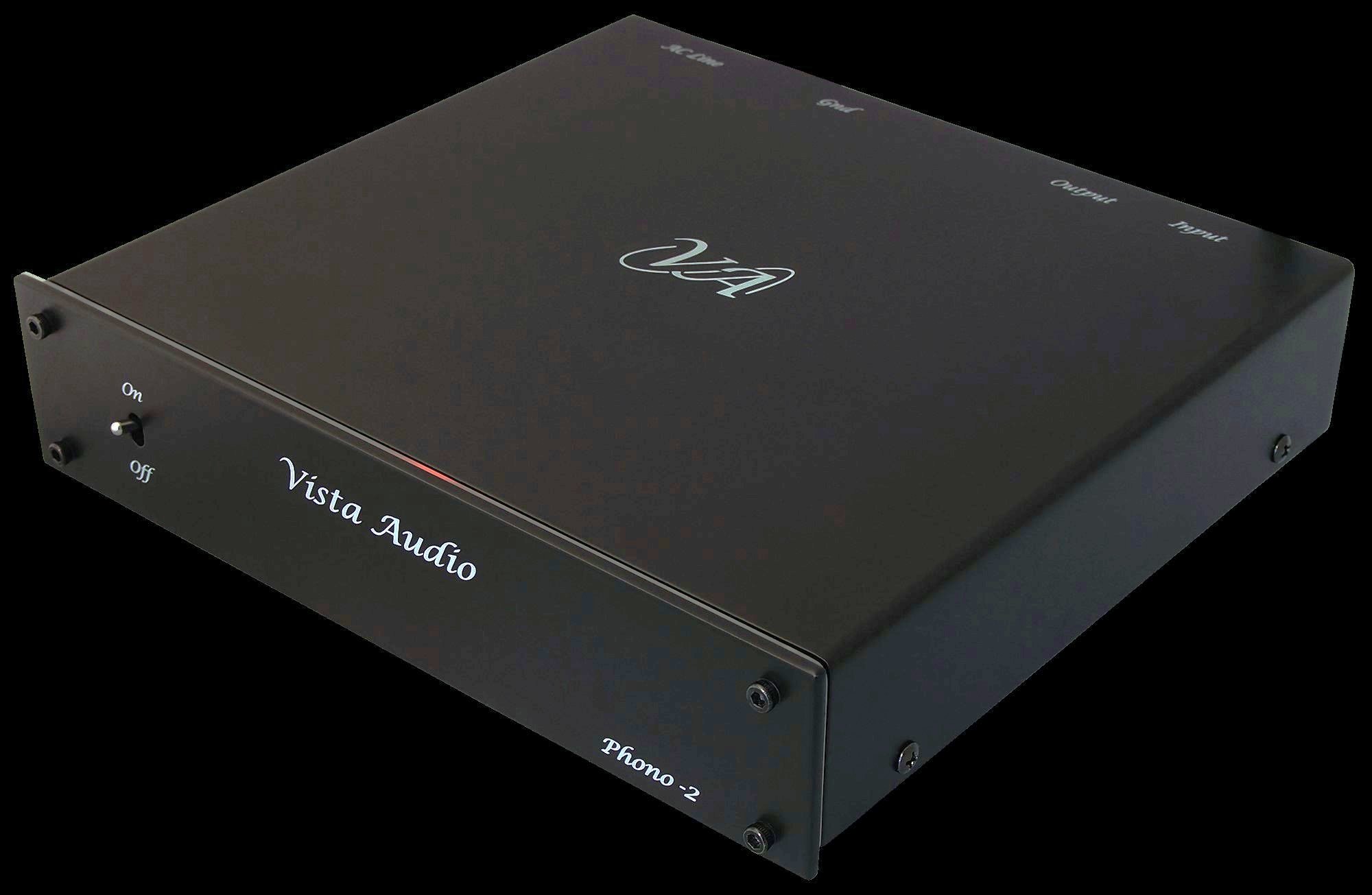

Phono‑2 MkII is a result of our commitment to continuous learning, which results in ever‑increasing performance levels for all classes of our products.
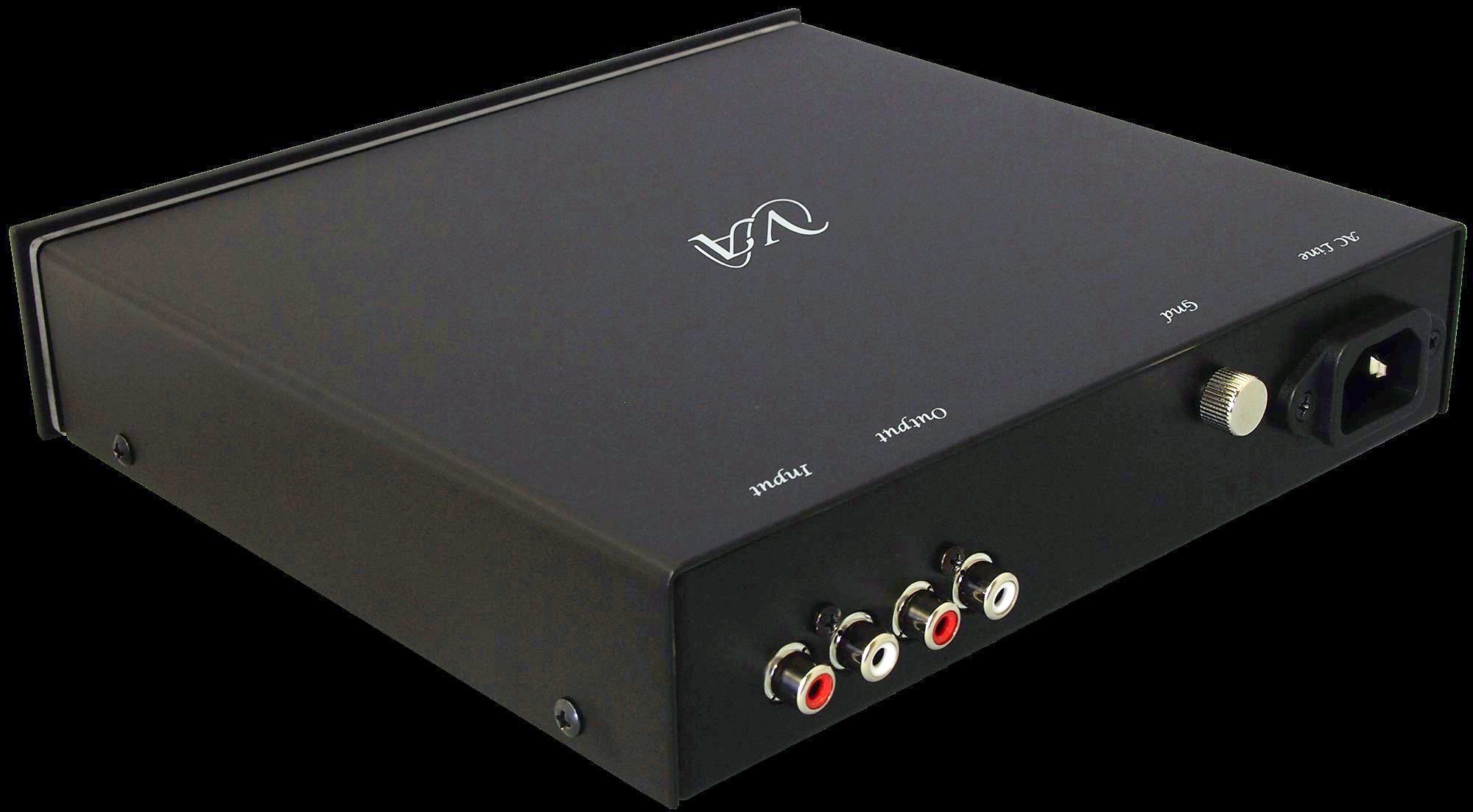
Redesigned PCB and integrated custom transformer make the MkII an even stronger performer with the wide variety of MM and MC cartridges.
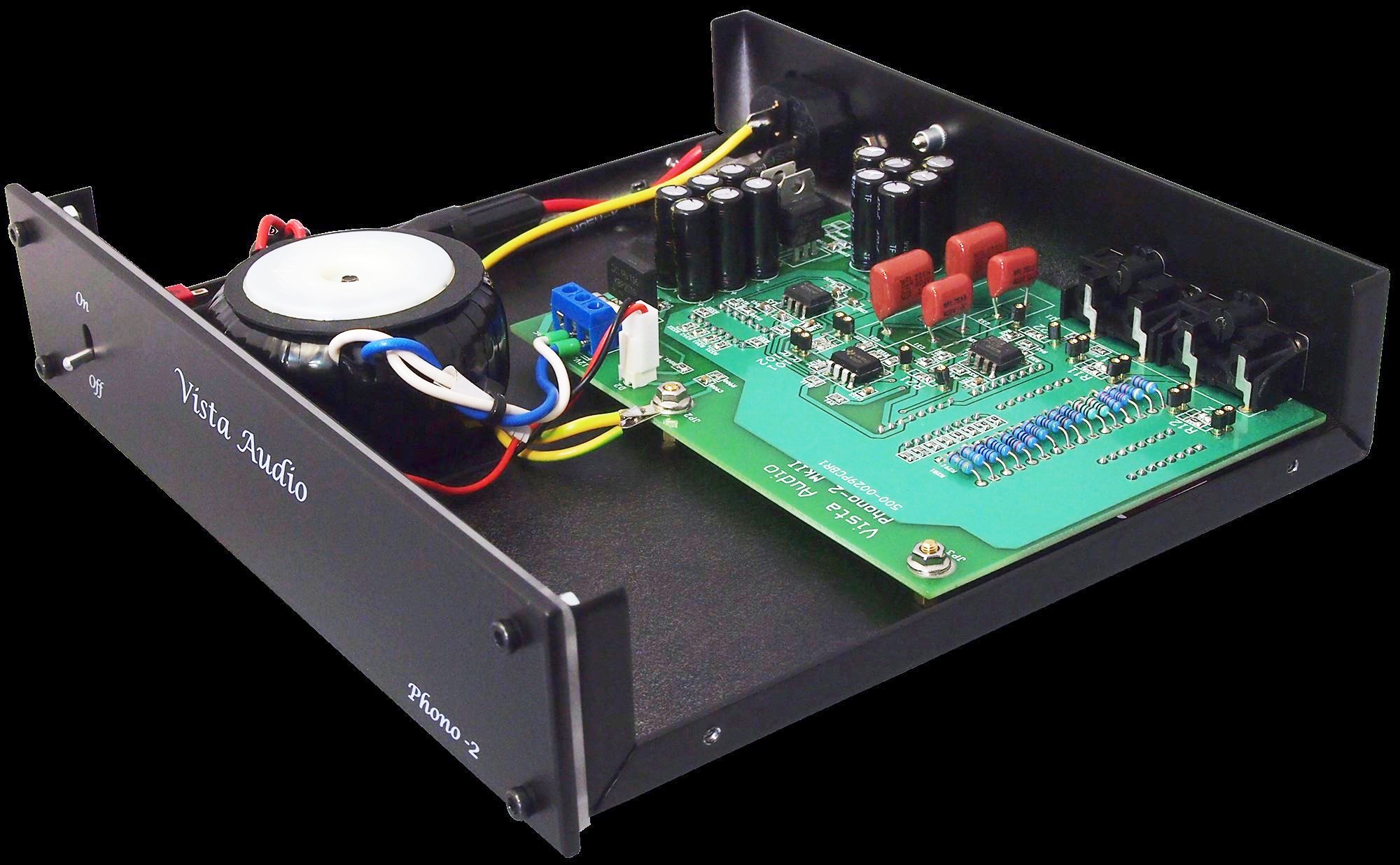
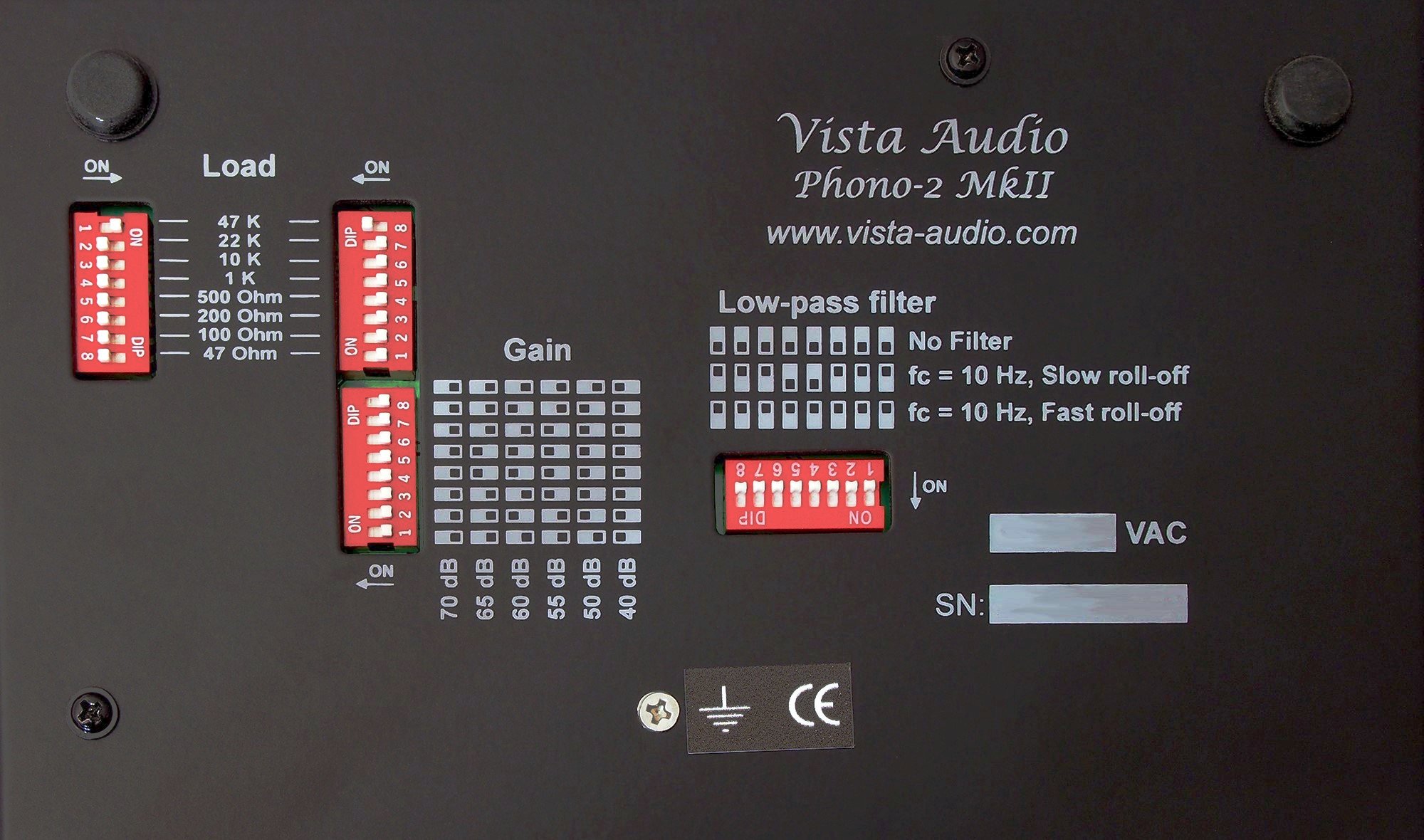
Bottom side of the Phono‑2 MkII hosts micro switches which are used to set cartridge loading (“Load”), preamplifier gain (“Gain”) and output filtration (“Low‑pass filter”). Examples of optimum load and gain settings for various cartridges are listed here. The image below shows a unit set for the 47 kOhm load, 40 dB gain and no output filter.
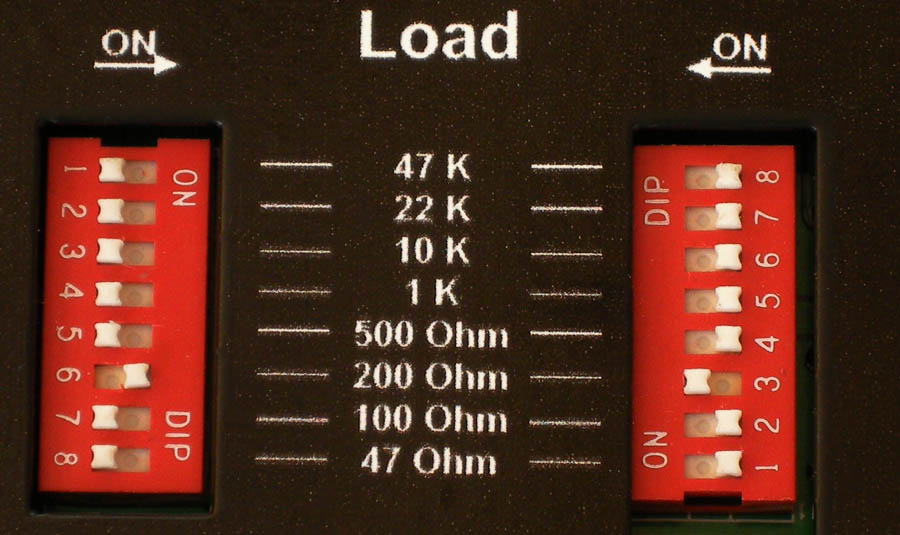
Eight discrete loads can be set by using individual switches (47 k, 22 k, 10 k, 1 k, 500 Ohm, 200 Ohm, 100 Ohm and 47 Ohm). The cartridge load is set by engaging switches as indicated by the legend printed between the switches. By combining loads, many more different combinations are possible (for example - by combining the 22 k and 10k switches, the resulting load will be 6.9 kOhm). The picture below illustrates load setting of 200 Ohm.
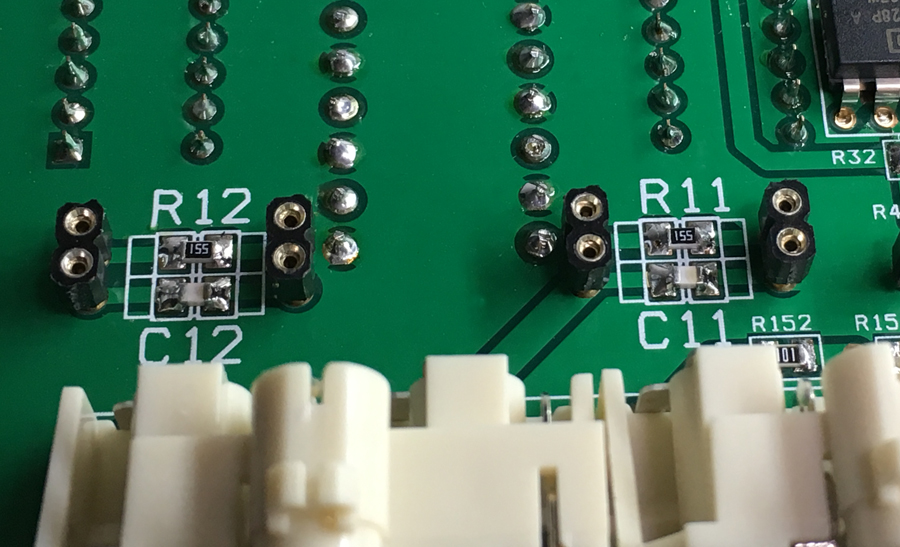
If that level of flexibility is not sufficient, similarly to the Phono-1's load and gain optimization, the Phono-2 MkII can have unlimited settings available by removing the top cover and accessing terminals for insertion of additional loading resistors and capacitors. Those terminals are marked R11 and R12 for loading resistors and C11 and C12 for loading capacitors.
NOTE: in order to accurately load the cartridge with the additional resistors, all microswitches on the rear panel should be in the OFF position. When adding a loading capacitance, the default capacitance of 50 pF should be accounted for: as an example - if the total loading capacitance of 200 pF is desired, additional capacitor needs to have value of 150 pF. Capacitors and resistors with lead diameter in the range of 0.025-0.032" (0.6-0.8mm) can be safely inserted. Larger diameter may cause damage to the sockets.
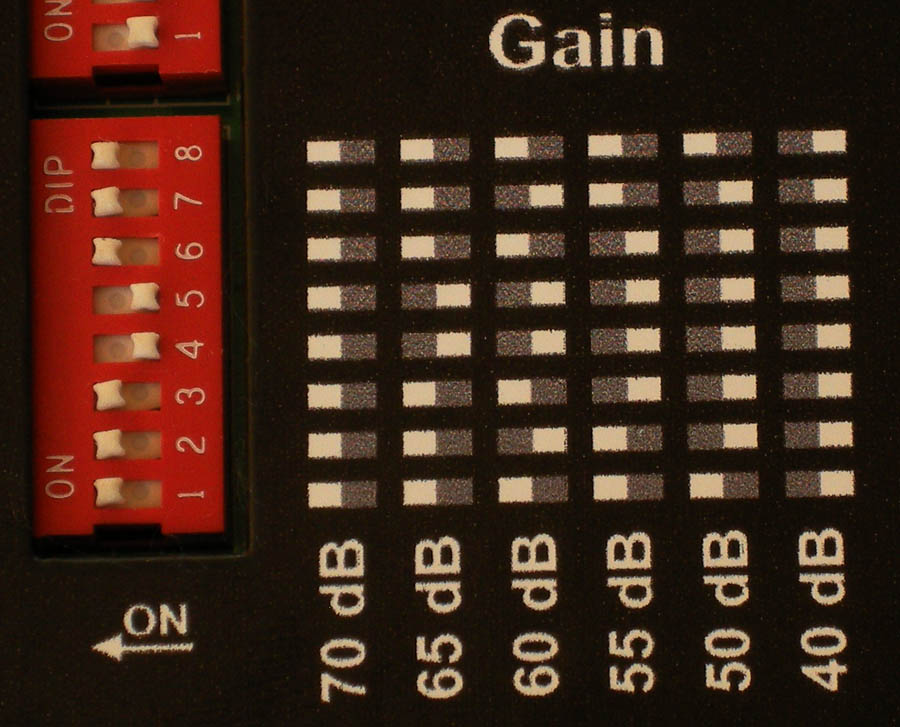
There are six different gain settings possible: 40 dB, 50 dB, 55 dB, 60 dB, 65 dB and 70 dB. The preamplifier gain is set by engaging microswitches as indicated by the printed legend next to the switch. The picture below illustrates the gain setting of 65 dB.
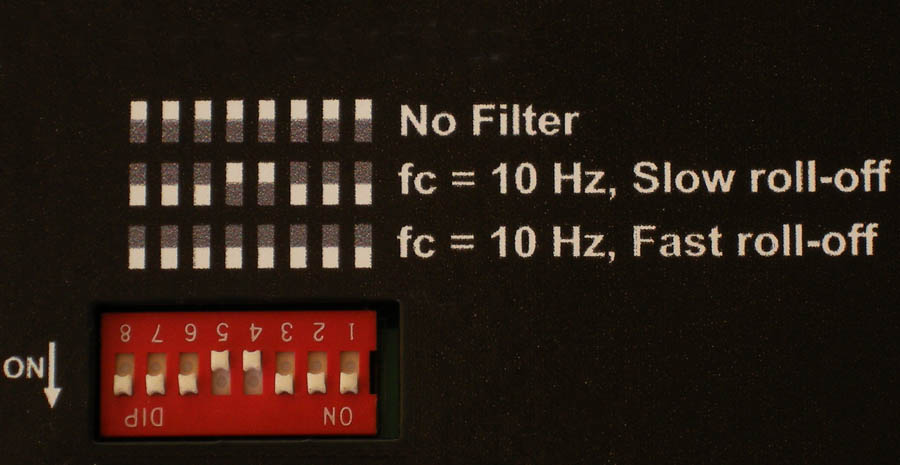
The Phono‑2 MkII features an innovative extension of the Phono‑1’s active offset cancellation circuit to provide output filtration without adding capacitors into the signal path. There are three available settings:
- No Filter: this setting leaves only the active offset cancellation engaged and the preamplifier's bandwidth is flat to 5Hz.
- 10 Hz, Slow roll-off filter: with this setting engaged, the Phono-2 MkII bandwidth goes down to 10 Hz, but roll-off starts at about 40 Hz. This is the most useful setting for majority in real-life turntable setups. We have also found this setting helpful with records equilized by the IEC RIAA curve.
- 10 Hz, Fast roll-off filter: our version of subsonic (rumble) filter. Bandwidth goes down to 10 Hz, but roll-off starts below 20 Hz, thus having no effect on audio frequencies.
The picture below illustrates low pass filter setting "10 Hz, Slow roll-off"
Specifications
- Class A operation when connected to a preamplifier with input impedance >1 kOhm
- Direct Coupling (no capacitors in the signal path)
- Passive RIAA circuit
- Frequency range: 5 Hz–40 kHz (no filter); 10 Hz–40 kHz (with filter)
- Input resistance: Eight presets (47 Ohm to 47 kOhm) plus internal sockets
- Input capacitance: 50 pF plus internal sockets
- Gain: 40–70 dB, adjustable in six steps
- Dimensions: 8.3 × 8.1 × 2 in / 210 × 205 × 50 mm
- Weight: 2.4 lb / 1.1 kg
- Input voltage: 120 V or 230 V versions
- US price: $399.00*
- Worldwide price: 269 Euro** *Price before state sales tax, when applicable. For details please click HERE **Export price without VAT, which may be charged by a local government. For details please click HERE
Please note: Two versions of the Phono-2 MkII, with 120 V and 230 V input voltage. These two versions are sold world-wide. The power cord does not ship with the unit: all power cords need to meet local safety regulations. A power cord with a standard "PC plug" (standard C13 conector) can be used. Minimun wire cross section of the power cord should be AWG18 (or 1.0 mm²), but for quality and durability we suggest AWG16 (1.5 mm²).
User manual (PDF) can be downloaded here.